

Showing posts with label music maker relief foundation. Show all posts
Showing posts with label music maker relief foundation. Show all posts
Monday, August 27, 2018

Monday, July 9, 2018
Tuesday, April 24, 2018
ETHEREAL SINGER THEOTIS TAYLOR TO RELEASE LONG-LOST RECORDINGS ON BIG LEGAL MESS RECORDS (FAT POSSUM), OUT JUNE 29th
Theotis Taylor’s new album, Something Within Me, will be the first time the world has heard a full length album from this legendary Georgian gospel singer and pianist. Something Within Me features
newly discovered music of Theotis’ voice and piano that was recorded in
1979 alongside new studio accompaniment from Jimbo Mathus (Squirrel Nut
Zippers), WIll Sexton (Amy LaVere), Liz Brasher, and more. Led by
producer Bruce Watson and recorded at Delta-Sonic Sound in Memphis, the
album captures the ethereal nature of Theotis’ unique style. The NY
Times had this to say about his 1990 performance at Carnegie Hall: ”Mr.
Taylor, a pianist from Georgia, had a light touch on the piano that
guided his harmonies from impressionistic clouds of sound to
boogie-woogie figures. He sang in falsetto, floating blues-tinged
melodies that had people in the audience shouting encouragement or
murmuring in admiration.”
When
Tim Duffy, founder of the nonprofit Music Maker Relief Foundation heard
about Theotis Taylor from folklorist George Mitchell he immediately
headed down to Fitzgerald, GA to meet Theotis. A friendship was forged
and led to getting the original master tape of a long lost album of
Theotis’. Big Legal Mess owner Bruce Watson had previously released two
of Theotis’ songs as part of his Pitch Gusman Records Story compilation,
and he jumped at the chance to do a full length album.
"Real
music! Beautiful, uplifting music! This would've been lost in time
forever, had it not been for the real people, who really took great care
to re-recorded it, because they wanted the world to hear what love is
like when love makes music!" - Taj Mahal
“Brother
Theotis Taylor’s music has become one of the most invigorating parts of
my day. His energy, his unbridled spirit and his signature touch on the
piano combine to create an entirely singular sound that resonates my
body from head to toe.” - Phil Cook (Hiss Golden Messenger, Megafaun)
Theotis
spent most of his life as a custodian, turpentine harvester, farm
worker, and as the first black foreman of the City of Miami’s Parks and
Recreation Department. Theotis played gospel music all his life and
garnered recognition in the 1990s for his appearances at Carnegie Hall’s
Folk Masters Series “There’s 12 Gates to the City”: Black Gospel
Styles, the Apollo Theatre, and at the NAACP’s 90th Convention. Now in
his 90s, Taylor preaches but is unable to play due to a tremble in his
arm from many years of hard labor. He will still sing for his
congregation if he can find a good person to handle the music. The right
spirit can only come from the right person. “You’ve got to be anointed
to do it right,” Taylor believes. “Anointed. It’s got to come from above.”
Theotis Taylor - Something Within Me - Tracklist:
Side A
-
Appreciation
-
Fly Away To Be At Rest
-
Thank You Jesus
-
Tides of Life
-
God’s Unchanging Hand
Side B
-
Steal Away
-
Something Within Me
-
Little Wooden Church
-
Stand By Me
-
Our Father
Friday, July 21, 2017
Monday, May 15, 2017
Tim Duffy bio
Tim Duffy’s career has been driven by the
musical traditions of the American South. His championing of these traditions starts
with the people who make the music. For decades now, he has provided for
musicians’ basic needs, guided their careers, and documented their lives in
stunning photographs.
After living for a time in the Old
Town section of Mombasa, Kenya, Tim returned to the States and completed an
M.A. in Folklore at the University of North Carolina, Chapel Hill. He formed
relationships with several traditional musicians and began searching for a
legendary bluesman they told him about named Guitar Gabriel. In Winston-Salem,
North Carolina Tim not only found Gabe, but also a community of impoverished
musicians who, despite their material lack, were rich in the traditions of the
African American South. Tim set about doing what he could to, first, take care
of their basic needs and, then, to get them gigs and document their music. The
Music Maker Relief Foundation was born. In the 22 years since its founding,
Tim—along with his wife and Managing Director, Denise, and their dedicated
team—have assisted and partnered with over 300 artists, issued over 150 CDs, and
reached over a million people with live performance in over 40 states and 17
countries around the globe. Tim has been recognized by the ABC Evening News as “Person of the Week,” and has been featured in
stories by Time, NPR, CBS, PBS and several local media outlets.
Given the nature of Music Maker’s
mission, Tim gained in-depth experience with booking, promotion, artist
development, and other managerial aspects of the music industry. Drawing on
this expertise, he established Music Maker’s Next Generation program, and
brought the Carolina Chocolate Drops to the public’s attention. These young African
American musicians reinvigorated a range of traditional music styles, wowed
audiences in the States and abroad, and won a Grammy in 2011. Members of the
group remain close Music Maker associates. Tim continues his management work
with Next Generation artists like Lakota John and Spencer Branch.
Photography has been at the heart of
Tim Duffy’s Music Maker journey. Tim took pictures initially for documentary
purposes, but soon realized that some of these images told rich, visually and
emotionally intricate stories. The great depth of Tim’s photographic vision
became clear when he turned to the photographic methods of the 19th
century, including the platinum palladium process dating back to the 1870s. His
wet plate portraits transport viewers into the space of the living past that he
has worked so hard to preserve. These images have been on display at the Atrium
Gallery of Atlanta’s Hartsfield-Jackson Airport, the Morris Museum in Augusta,
GA, and several galleries in North Carolina, New York, and Kentucky. Some of
his plates have become part of the permanent collections of the Smithsonian
Museum of African American Culture and the New Orleans Museum of Art.
Monday, March 6, 2017
AFTER HELPING MUSICIANS IMPACTED BY RECORD FLOODING IN LOUISIANA, MUSIC MAKER RELIEF FOUNDATION SPONSORS 4TH ANNUAL BATON ROUGE MARDI GRAS FESTIVAL
The Music Maker Relief Foundation (Hillsborough, NC) -- created the
Baton Rogue Musicians Fund (BRMF). The fund was created in partnership
with the Baton Rouge Blues Foundation and will directly supported
musicians impacted by the Louisiana Flood. The BRMF ended up raising
over $62,000 for those impacted by the flooding.
Beginning August 12th a torrential downpour began over the state of Louisiana. Nearly 7 trillion gallons of water fell from the sky causing record-breaking flooding that has damaged more than 60,000 homes.
One of the damaged homes belongs to 91 year old blues pianist Henry Gray. Henry still tours both solo and with his band, Henry Gray and the Cats. Though he has travelled the world playing the blues with the Rolling Stones, Howlin' Wolf and countless others, Henry still lives in a humble home and like so many other working people, did not have flood insurance.
Music Maker founder and president, Tim Duffy stated, “When we heard that legends like Henry were impacted, we immediately reached out to send aid. Music Maker has been helping roots musicians in crisis for more than 20 years. In a situation like this, we first need to help stabilize an artist’s health and housing situation, then we can focus on getting instruments back in their hands and giving them access to stages so they can rebuild their livelihood.”
The floods impact can still be felt in many areas of Louisiana and with talking to the Baton Rouge community Music Maker Relief Foundation found that they were struggling to fund their annual Mardi Gras Festival. Music Maker, along with the Jazz Foundation of America, is sponsoring this festival on Saturday, February 25th at the North Boulevard Town Square, to give many impacted musicians a gig and to allow the people of Baton Rouge to celebrate this great Louisiana cultural tradition.
Contemporary artists around the world recognize the significance of roots musicians form the South. Grammy-winning artist Taj Mahal offered "These musicians are the foundation of all popular music in the world. When disaster turns on them it is not time to turn our backs. Let's show them the respect!"
Beginning August 12th a torrential downpour began over the state of Louisiana. Nearly 7 trillion gallons of water fell from the sky causing record-breaking flooding that has damaged more than 60,000 homes.
One of the damaged homes belongs to 91 year old blues pianist Henry Gray. Henry still tours both solo and with his band, Henry Gray and the Cats. Though he has travelled the world playing the blues with the Rolling Stones, Howlin' Wolf and countless others, Henry still lives in a humble home and like so many other working people, did not have flood insurance.
Music Maker founder and president, Tim Duffy stated, “When we heard that legends like Henry were impacted, we immediately reached out to send aid. Music Maker has been helping roots musicians in crisis for more than 20 years. In a situation like this, we first need to help stabilize an artist’s health and housing situation, then we can focus on getting instruments back in their hands and giving them access to stages so they can rebuild their livelihood.”
The floods impact can still be felt in many areas of Louisiana and with talking to the Baton Rouge community Music Maker Relief Foundation found that they were struggling to fund their annual Mardi Gras Festival. Music Maker, along with the Jazz Foundation of America, is sponsoring this festival on Saturday, February 25th at the North Boulevard Town Square, to give many impacted musicians a gig and to allow the people of Baton Rouge to celebrate this great Louisiana cultural tradition.
Contemporary artists around the world recognize the significance of roots musicians form the South. Grammy-winning artist Taj Mahal offered "These musicians are the foundation of all popular music in the world. When disaster turns on them it is not time to turn our backs. Let's show them the respect!"
Wednesday, November 30, 2016
Monday, October 17, 2016
Friday, September 30, 2016
NPR PROFILES SOUTHERN SOUL MAN ROBERT FINLEY AS HIS DEBUT ‘AGE DON’T MEAN A THING’ OUT TODAY ON BIG LEGAL MESS
SINGER DISCUSSES GOING BLIND AS 2ND SYNDICATED RADIO SEGMENT TAPES NEXT WEEK AT MEMPHIS SHOW
NPR aired a profile on Robert Finley nationally this week as his debut album ‘Age Don’t Mean a Thing’ on Big Legal Mess (Fat Possum) comes out today. Finley told NPR that being able to play soul music for a living in spite of going blind “a dream come true… what more could a man ask.” He also described his music as “blues that make a person hold their head up instead of dropping it down.” He and NPR host Jeremy Hobson discussed how money from his father for a pair of shoes went to his first guitar; learning music from watching musicians in church; his religious family disapproving of the blues; what it’s like to go to school to adapt to becoming legally blind; and sensing the energy from the audience even when he can’t see it.
‘Age Don’t Mean a Thing’ is earning praise across the board as he prepares for a Memphis album release show October 6 at Lafayette’s to be taped by syndicated radio show Beale Street Caravan.
Here’s what we’re reading and hearing:
“Not your average up-and-comer… sounds good to me!”
- Jeremy Hobson, NPR Here & Now, September 26, 2016
“More than convincing.”
- Jon Pareles, New York Times, January 18, 2016
“Amazing… great stuff.”
- Rob Weisberg, NPR Music, January 26, 2016
“ Too legit to quit.”
- Hannah Hayes, Southern Living, August 22, 2016
"A delightful mix of old school blues, soul and R&B, with all of it propelled by Finley’s gritty-yet-laid-back voice and equally effortless guitar work. It’s a surprisingly confident effort from a first-time recording artist."
- Sam D'Arcangelo, Offbeat Magazine, September 29, 2016
“A slab of dirty, sexy soul, gyrating around a firm funk backbeat in much the same way as most pairs of hips exposed to this song might. Finley’s Southern croon soars above sensual guitar and horns, reveling in the freedom the music provides and exploring the crannies of the instrumentation.”
- Will Rivitz, Pop Matters, August 15, 2016
“His brand of Southern Soul is tough to resist… a master at work!”
- Soul Tracks, August 29, 2016
NPR aired a profile on Robert Finley nationally this week as his debut album ‘Age Don’t Mean a Thing’ on Big Legal Mess (Fat Possum) comes out today. Finley told NPR that being able to play soul music for a living in spite of going blind “a dream come true… what more could a man ask.” He also described his music as “blues that make a person hold their head up instead of dropping it down.” He and NPR host Jeremy Hobson discussed how money from his father for a pair of shoes went to his first guitar; learning music from watching musicians in church; his religious family disapproving of the blues; what it’s like to go to school to adapt to becoming legally blind; and sensing the energy from the audience even when he can’t see it.
‘Age Don’t Mean a Thing’ is earning praise across the board as he prepares for a Memphis album release show October 6 at Lafayette’s to be taped by syndicated radio show Beale Street Caravan.
Here’s what we’re reading and hearing:
“Not your average up-and-comer… sounds good to me!”
- Jeremy Hobson, NPR Here & Now, September 26, 2016
“More than convincing.”
- Jon Pareles, New York Times, January 18, 2016
“Amazing… great stuff.”
- Rob Weisberg, NPR Music, January 26, 2016
“ Too legit to quit.”
- Hannah Hayes, Southern Living, August 22, 2016
"A delightful mix of old school blues, soul and R&B, with all of it propelled by Finley’s gritty-yet-laid-back voice and equally effortless guitar work. It’s a surprisingly confident effort from a first-time recording artist."
- Sam D'Arcangelo, Offbeat Magazine, September 29, 2016
“A slab of dirty, sexy soul, gyrating around a firm funk backbeat in much the same way as most pairs of hips exposed to this song might. Finley’s Southern croon soars above sensual guitar and horns, reveling in the freedom the music provides and exploring the crannies of the instrumentation.”
- Will Rivitz, Pop Matters, August 15, 2016
“His brand of Southern Soul is tough to resist… a master at work!”
- Soul Tracks, August 29, 2016
Monday, September 26, 2016
TWO-TIME GRAMMY WINNER, BLUES HALL OF FAMER & AMERICANA MUSIC LIFETIME ACHIEVEMENT AWARD WINNER TAJ MAHAL’S STRIPPED DOWN ALBUM ‘LABOR OF LOVE’ OUT DECEMBER 16 ON ACOUSTIC SOUNDS
FIRST RELEASE IN FOUR YEARS SET FOR LP, FEATURES SOLO FAVORITES FROM 1998 PLUS COLLABORATIONS WITH MUSIC MAKER RELIEF FOUNDATION ARTISTS
Two-time GRAMMY Award winner, Blues Hall of Famer, and Americana Music Lifetime Achievement Award recipient Taj Mahal’s 47th album ‘Labor of Love’ will come out December 16 on Acoustic Sounds.
‘Labor of Love’ features some of his most beloved materials such as the murder ballad “Stack-O-Lee,” Mississippi John Hurt’s “My Creole Belle,” the Delta standard “Walking Blues,” and the longtime live favorite “Fishing Blues.” Taj also collaborates with one armed harmonica player Neal Pattman, blind singer Cootie Stark, guitar master Cool John Ferguson (profiled in a recent issue of Premier Guitar), and Piedmont blueswoman Algia Mae Hinton. Pattman, Stark, and Baker have since passed on. Full liner notes by UNC writer Will Boone paint the full picture. All songs are previously unreleased while four of the songs have not been recorded in any other version by Taj.
Enraptured by the mission of the Music Maker Relief Foundation, Taj Mahal met MMRF head Tim Duffy in 1993 and introduced him to the Rolling Stones, BB King, Dan Ackroyd, and others; he is on the Advisory Board and has been a staunch MMRF ally and friend to Tim ever since. On a 42-date tour in 1998, Music Maker Relief Foundation head Tim Duffy set up recording equipment in whatever hotels Taj and the Music Makers were staying. Finally, in Houston, TX, Taj and the Music Makers got to playing after hours; six solo tracks were recorded along with seven tracks of Taj with Music Maker Relief Foundation artists such as National Endowment for the Arts’ National Heritage Fellowship winners Etta Baker and John Dee Holeman. ‘Labor of Love’ is Taj’s first release in four years. Of working with those musicians, Taj says that he most enjoyed “getting to know their lives and how they made things work” while getting “closer to the source.”
In the past half decade alone, Mahal has opened for Bob Dylan, Wynton Marsalis, and Eric Clapton; performed on Late Night with Jimmy Fallon with the Roots; guested on new Clapton recordings; joined the Rolling Stones onstage; performed at the GRAMMY Museum in Los Angeles, CA; joined a Bonnaroo jam with Susan Tedeschi, Anthony Hamilton, Derek Trucks, Chaka Khan; and performed on the Americana Music Awards.
Raised in a West Indian-American and African-American family, Taj Mahal signed to Columbia Records and began his recording career in 1968. Since then, he has played the music of the African diaspora, drawing connections between African, Carribean, South Pacific, and Southern American culture. Bonnie Raitt said of him, "Taj is probably the most important bridge we have between blues and rock-n-roll. He's as bad as they get." Mick Jagger has called him “a living link to the old blues tradition.”
'Labor of Love' Track List:
1. Stagger Lee
2. Shortnin' Bread (with Neal Pattman)
3. My Creole Belle
4. I Ain't The One You Love (with Alga Mae Hinton)
5. Fishin’ Blues
6. Mistreated Blues (with John Dee Holeman)
7. Zanzibar
8. So Sweet (with Cootie Stark)
9. Spike Drivers Blues
10. Hambone (with John Dee Holeman)
11. Walkin’ Blues
12. John Henry (with Etta Baker)
13. Song For Brenda (with Cool John Ferguson)
Two-time GRAMMY Award winner, Blues Hall of Famer, and Americana Music Lifetime Achievement Award recipient Taj Mahal’s 47th album ‘Labor of Love’ will come out December 16 on Acoustic Sounds.
‘Labor of Love’ features some of his most beloved materials such as the murder ballad “Stack-O-Lee,” Mississippi John Hurt’s “My Creole Belle,” the Delta standard “Walking Blues,” and the longtime live favorite “Fishing Blues.” Taj also collaborates with one armed harmonica player Neal Pattman, blind singer Cootie Stark, guitar master Cool John Ferguson (profiled in a recent issue of Premier Guitar), and Piedmont blueswoman Algia Mae Hinton. Pattman, Stark, and Baker have since passed on. Full liner notes by UNC writer Will Boone paint the full picture. All songs are previously unreleased while four of the songs have not been recorded in any other version by Taj.
Enraptured by the mission of the Music Maker Relief Foundation, Taj Mahal met MMRF head Tim Duffy in 1993 and introduced him to the Rolling Stones, BB King, Dan Ackroyd, and others; he is on the Advisory Board and has been a staunch MMRF ally and friend to Tim ever since. On a 42-date tour in 1998, Music Maker Relief Foundation head Tim Duffy set up recording equipment in whatever hotels Taj and the Music Makers were staying. Finally, in Houston, TX, Taj and the Music Makers got to playing after hours; six solo tracks were recorded along with seven tracks of Taj with Music Maker Relief Foundation artists such as National Endowment for the Arts’ National Heritage Fellowship winners Etta Baker and John Dee Holeman. ‘Labor of Love’ is Taj’s first release in four years. Of working with those musicians, Taj says that he most enjoyed “getting to know their lives and how they made things work” while getting “closer to the source.”
In the past half decade alone, Mahal has opened for Bob Dylan, Wynton Marsalis, and Eric Clapton; performed on Late Night with Jimmy Fallon with the Roots; guested on new Clapton recordings; joined the Rolling Stones onstage; performed at the GRAMMY Museum in Los Angeles, CA; joined a Bonnaroo jam with Susan Tedeschi, Anthony Hamilton, Derek Trucks, Chaka Khan; and performed on the Americana Music Awards.
Raised in a West Indian-American and African-American family, Taj Mahal signed to Columbia Records and began his recording career in 1968. Since then, he has played the music of the African diaspora, drawing connections between African, Carribean, South Pacific, and Southern American culture. Bonnie Raitt said of him, "Taj is probably the most important bridge we have between blues and rock-n-roll. He's as bad as they get." Mick Jagger has called him “a living link to the old blues tradition.”
'Labor of Love' Track List:
1. Stagger Lee
2. Shortnin' Bread (with Neal Pattman)
3. My Creole Belle
4. I Ain't The One You Love (with Alga Mae Hinton)
5. Fishin’ Blues
6. Mistreated Blues (with John Dee Holeman)
7. Zanzibar
8. So Sweet (with Cootie Stark)
9. Spike Drivers Blues
10. Hambone (with John Dee Holeman)
11. Walkin’ Blues
12. John Henry (with Etta Baker)
13. Song For Brenda (with Cool John Ferguson)
Tuesday, September 20, 2016
Taj Mahal 'Labor Of Love' liner notes
The blues live on because the blues give people life, not the other way around. Talk about the blues with Taj Mahal
or Tim Duffy—founder of the Music Maker Relief Foundation—and you will
quickly understand how deeply they grasp this. Both men are devoted to
tradition, but not a museum kind of tradition. They’re devoted to living
tradition; tradition that is not only “viable and vital”—as Taj puts it—but tradition that is life-giving and life-sustaining.
When Tim recounts his first experiences hearing Taj play
live in the early 1980s, he describes a performer who rumbled with the
echoes of ancestors and forefathers as he created a sound that was
completely relevant in the present moment. Taj was not a revivalist. He was a medium for the blues’ reviving power.
Tim and Taj first connected in the mid-1990s. Tim, just getting the Music Maker Relief Foundation off the ground, had released A Living Past, a book and CD set featuring artists he was working with. When this collection found its way to Taj,
it stopped him dead in his tracks. For a long time, he had nurtured a
belief that there were musicians out there playing traditional blues
with life and vigor; musicians who didn’t simply remember the music, but
who got life from it. And here they were. Taj describes
hearing their music as “deeply personal,” something that illuminated
things about his own musical roots he had intuited before but now came
to understand more fully. Taj was
also was fascinated by Tim. Unlike so many folklorists of the past, Tim
seemed to understand that preserving tradition did not simply mean
sticking photographs and recordings into an archive. Preserving
tradition was “all about taking loving care of these older artists.”
Taj brought
Tim out to L.A. and introduced him and his new foundation to folks like
B.B. King, The Rolling Stones, and Eric Clapton. Tim invited Taj to
his place in rural Pinnacle, North Carolina where the celebrated
musician slept on a palette on the floor and hung out with several Music
Maker artists. He loved how they played and sang, but he especially
loved “getting to know their lives and how they made things work.”
Taj says
he wanted to “give whatever [he] had” to Tim’s foundation, and he
figured maybe his name had “some kind of cachet.” Things fell into
place, including a sponsorship from Winston cigarettes, and in 1998 a
group of Music Maker artists set off on a mammoth 42-city tour with Taj as
the headliner. Talk to anyone who was involved and it’s immediately
clear that this was a special time. Artists who had spent the previous
decades playing in drink houses and juke joints were lighting up
audiences on high-profile stages across the country, rising to ever
higher heights. The bigger the show, the better they played.
Taj was
tearing it up too, of course. But he was also soaking it in. He was
hanging out with artists like Cootie Stark, Neal Pattman, and Beverly
“Guitar” Watkins. He was listening to them and learning from them. And
he was reconnecting to music he had been hearing and playing since he
was a kid. But now he was grasping it in a new way, going “deeper.”
Nothing was drastically different, he says, it just felt like he was
getting “closer to the source.”
Tim—sensing
the incredibly rich musical possibilities in the air—hoped to catch
something on tape. In addition to shepherding a motley assemblage of
senior citizen bluesmen and women through a never-ending series of
unfamiliar cities and settings, Tim was lugging around high-end
recording equipment that he had recently acquired from the legendary
audio wizard Mark Levinson. He set it up in hotel rooms in Chicago,
Cleveland, Dallas—wherever—hoping he could get Taj to do an impromptu session. But it never seemed to work out.
Then one night in Houston, the daughter of Katie Mae was hanging around—the Katie
Mae, the woman immortalized in the Lightin’ Hopkins classic “Katie Mae
Blues.” Hopkins, with his highly-original cut-to-the bone poetry and raw
elegance, is an Olympian figure of the blues, and Taj,
being steeped in the blues’ American mythology, couldn’t miss the
chance to meet this woman face-to-face. So, a few bluesmen and Tim and Taj and Katie Mae’s daughter hung out together in this Houston hotel room. After a while, Taj picked
up an acoustic and started whipping out classic tunes—“Stack-O-Lee,”
“Walking Blues,” “Fishing Blues”—merging his reinvigorated feeling for
tradition with his inimitable personal style. The tape was rolling.
Around the time of the Winston tour, Taj often
visited North Carolina, first coming to Pinnacle and later to Music
Maker’s new headquarters in Hillsborough. Tim had “tapped into a full-on
living scene,” Taj says, and he
was reeling with a sense of incredible good fortune that he was getting
to be a part of it. He regularly sat in on recording sessions (usually
long hang-out-and-barbecue sessions with some recording thrown in). When
the music got going, Taj would
play some piano, bass, harp, banjo, mandolin, whatever was needed. “It
was fun. Really fun to get to use all my chops like that,” Taj says,
“but I never got in just because I could. If I didn’t have something to
say, I shut up.” He overflows with feeling when he talks about playing
with these folks; singular artists like John Dee Holeman, Cool John
Ferguson, Cootie Stark, and Algia Mae Hinton.
Tim loved the sounds that were getting recorded. The players were
letting loose, digging in, coming alive as the music came through them.
This was it, that place where tradition becomes “viable and
vital” in the present. He wanted to put this stuff out—these North
Carolina sessions and the Houston hotel recordings. But the time wasn’t
right. Taj had just released a
string of great studio albums with a throwback R&B flavor, and there
was a new 3-disc retrospective of his work on the market. There really
wasn’t any commercial space for Taj Mahal versions of “Hambone” and “Shortin’ Bread.” So the recordings just sat around.
For about two decades now, Taj and
Tim have nurtured their friendship and partnership. They have
incredibly nice things to say about each other. Both men credit the
other with enriching their respective life, career, and musical journey.
Tim says that, “having Taj Mahal be a champion for Music Maker has been one of the greatest joys of my life.” He goes on, “Without Taj, Music Maker would not be what it is, it would be something else; something different.” Taj’s spirit, it seems, infuses the whole enterprise.
In 2015, Tim’s foundation turned 21 years old, and Taj,
born in 1942, was settling into his eighth decade of life. Both men
were looking back and reflecting. They returned to these recordings made
during that magical time in the late 1990s. In them they heard what
Albert Murray, the great African American cultural critic, claimed to be
the essence of blues style, “a unique blend of warmth, sensitivity,
nonsense, vitality, and elegance.” These tracks needed to be heard. Taj wanted to do a vinyl-only release and Tim thought that “was really groovy.”
So here they are, on a piece of solid wax. Comb through all the dozens of Taj Mahal
albums released in the last few decades and you won’t find a more
intimate portrayal of his stripped-down traditional blues style, nor a
better representation of Taj as a
freewheeling, fun-loving, always in-the-pocket sideman. “When I listen
to this,” Tim says, “it just shows how good the music really is. His
version of ‘Shortin’ Bread’ with Neal Pattman is, you know, it’s just
amazing. It’s as good as anything that was on wax in the 20s and 30s.”
And it is, precisely because you don’t get any sense that Taj was trying to recreate some old record. He just sounds like he’s having fun. The album might be a Labor of Love (and
the labor is there, no doubt), but when the needle hits the grooves,
what really comes across is the love: the love of the budding friendship
between Taj and Tim; the love of
the blues; the loving care that is the essence of real preservation;
and, especially, the love of being in the moment, playing, creating a
sound that gives you life. I asked Taj what
he wanted the record to say to people. “Hrmmh,” he grunted, diverting
attention from my too-serious question, “just enjoy it.”
-Will Boone
Tuesday, August 30, 2016
BLUES LOVERS STEP UP TO SUPPORT MUSICIANS IMPACTED BY THE LOUISIANA FLOODS
The Music Maker Relief Foundation has created the Baton Rouge Musicians
Fund (BRMF). The fund was created in partnership with the Baton Rouge
Blues Foundation and will directly support musicians impacted by the
Louisiana Flood.
Beginning August 12, 2016, heavy rains fell over the state of Louisiana. The record-breaking flooding, caused by the nearly seven trillion gallons of rain that fell, has damaged more than 60,000 homes.
One of the damaged homes belongs to 91 year-old blues pianist Henry Gray, a native of Kenner, Louisiana. Gray, who still tours both solo and with his band, Henry Gray and the Cats, has traveled the world playing the blues with the Rolling Stones, Howlin' Wolf and countless others. Despite his success on the global stage, Gray still lives in a humble home, and like 54 percent of home owners in the flood zone, has no flood insurance.
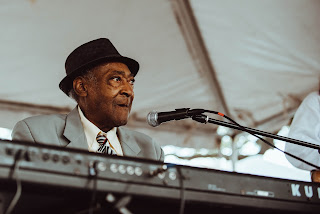

(Photo credit Jordan Hefler/Baton Rouge Blues Festival, click for high res)
As news of the historic flooding hit, Music Maker Relief Foundation Founder and President Timothy Duffy was quick to respond. “Music Maker has been helping roots musicians in crisis for more than 20 years, so when we heard that legends like Henry were impacted by the flooding, we immediately reached out to send aid," Duffy said.
When Clarke Gernon, Jr., president of the Baton Rouge Blues Foundation, heard Music Maker was helping Gray, he offered to partner with Duffy to help the many other Louisiana musicians in need. “Guitars. Keyboards. Amps. These among other instruments are the tools of the trade when you are a working musician in the Baton Rouge Blues community. When these items are gone, not to mention one's house and possessions, it really limits your ability to pay your bills. We hope this relief fund can help bridge the gap and get these suffering musicians back to playing the blues and not just feeling them,” Gernon said.
Duffy agreed and offered to mobilize Music Maker resources to set up the Baton Rouge Musicians Fund and assist these performers. "In a disaster like this, we first need to help stabilize an artist’s health and housing situation," says Duffy. "Then we can focus on getting instruments back in their hands and giving them access to stages so they can rebuild their livelihoods.”
Contemporary artists around the world recognize the significance of roots musicians from the South. Grammy-winning artist Taj Mahal is lending his support to the Baton Rouge Musicians Fund and hopes others will join him. "These musicians are the foundation of all popular music in the world. When disaster turns on them, it is not time to turn our backs. Let's show them the respect!," Mahal said.
Tax-deductible donations can be made to the Baton Rouge Musicians Fund through Music Maker at musicmaker.org.
Music Maker Relief Foundation, a 501c3 non-profit, preserves and promotes the musical traditions of the American South. Since 1994 they have partnered with traditional artists over 55 years old who survive on a yearly income of less than $18,000, sustaining their day-to-day needs while building their careers. Through Music Maker, our rich heritage of music will not be lost with the passing of time. Music Maker has been featured on PBS NewsHour, NPR Weekend Edition and CBS Evening News. More information at http://www.musicmaker.org/
Founded in 2002, the Baton Rouge Blues Foundation is a non-profit organization striving to promote, preserve and celebrate the Baton Rouge blues culture and bring the best of Louisiana swamp blues music to the world. Today the Foundation sponsors a Blues Education program, a Blues Music History Project, an annual Blue Carpet Blues Gala, and the annual Baton Rouge Blues Festival. More information at http://www.
Beginning August 12, 2016, heavy rains fell over the state of Louisiana. The record-breaking flooding, caused by the nearly seven trillion gallons of rain that fell, has damaged more than 60,000 homes.
One of the damaged homes belongs to 91 year-old blues pianist Henry Gray, a native of Kenner, Louisiana. Gray, who still tours both solo and with his band, Henry Gray and the Cats, has traveled the world playing the blues with the Rolling Stones, Howlin' Wolf and countless others. Despite his success on the global stage, Gray still lives in a humble home, and like 54 percent of home owners in the flood zone, has no flood insurance.


(Photo credit Jordan Hefler/Baton Rouge Blues Festival, click for high res)
As news of the historic flooding hit, Music Maker Relief Foundation Founder and President Timothy Duffy was quick to respond. “Music Maker has been helping roots musicians in crisis for more than 20 years, so when we heard that legends like Henry were impacted by the flooding, we immediately reached out to send aid," Duffy said.
When Clarke Gernon, Jr., president of the Baton Rouge Blues Foundation, heard Music Maker was helping Gray, he offered to partner with Duffy to help the many other Louisiana musicians in need. “Guitars. Keyboards. Amps. These among other instruments are the tools of the trade when you are a working musician in the Baton Rouge Blues community. When these items are gone, not to mention one's house and possessions, it really limits your ability to pay your bills. We hope this relief fund can help bridge the gap and get these suffering musicians back to playing the blues and not just feeling them,” Gernon said.
Duffy agreed and offered to mobilize Music Maker resources to set up the Baton Rouge Musicians Fund and assist these performers. "In a disaster like this, we first need to help stabilize an artist’s health and housing situation," says Duffy. "Then we can focus on getting instruments back in their hands and giving them access to stages so they can rebuild their livelihoods.”
Contemporary artists around the world recognize the significance of roots musicians from the South. Grammy-winning artist Taj Mahal is lending his support to the Baton Rouge Musicians Fund and hopes others will join him. "These musicians are the foundation of all popular music in the world. When disaster turns on them, it is not time to turn our backs. Let's show them the respect!," Mahal said.
Tax-deductible donations can be made to the Baton Rouge Musicians Fund through Music Maker at musicmaker.org.
Music Maker Relief Foundation, a 501c3 non-profit, preserves and promotes the musical traditions of the American South. Since 1994 they have partnered with traditional artists over 55 years old who survive on a yearly income of less than $18,000, sustaining their day-to-day needs while building their careers. Through Music Maker, our rich heritage of music will not be lost with the passing of time. Music Maker has been featured on PBS NewsHour, NPR Weekend Edition and CBS Evening News. More information at http://www.musicmaker.org/
Founded in 2002, the Baton Rouge Blues Foundation is a non-profit organization striving to promote, preserve and celebrate the Baton Rouge blues culture and bring the best of Louisiana swamp blues music to the world. Today the Foundation sponsors a Blues Education program, a Blues Music History Project, an annual Blue Carpet Blues Gala, and the annual Baton Rouge Blues Festival. More information at http://www.
Thursday, July 28, 2016
Robert Finley bio
“Put me last on the bill,” Robert Finley says, “because the
party’s going to go as high as it’s going to go when I’m playing.” From someone
else’s mouth that might be braggadocio, but when Finley says it, he’s just
telling the truth. Onstage, he’s infectious. It’s the whole package—his sound,
his songs, his energy, his look. Hailing from Louisiana, he mixes a
Memphis-to-Texas electric southern grit with Nashville-clever songs. He’s
gangly and graceful with an indomitable smile that radiates beneath his black
ridge-top hat. “I don’t believe in doing a lot of holding back,” Finley says,
“I’m going to give you everything I’ve got.”
Finley came up singing gospel, the only kind of music his
parents would allow. His palette expanded quickly, however, through hanging out
with older guys and trying to meet the demands of impressing the opposite sex.
At 11, he took some money his father had given him to buy shoes and bought a
guitar instead. With his friends, he starting making stuff up—rhymes and
melodies, “whatever it took to keep the girls around,” he says. Words have
always come easily to him. “Once I get the music, the lyrics just come
natural,” Finley explains. “All you’ve got to do is look around. Just about
anything you’d want to write about, somebody’s going through it. It’s hard to
miss. Every day is a song, really.”
As a performer, Finley cut his teeth in the Army. He joined
at 17 and was stationed in Germany working on helicopters. He got a secondary
MOS (Military Occupational Specialty) as an entertainer and started leading his
own band. They had a big repertoire, but specialized in soul and R&B—songs
by Joe Simon, Tyrone Davis, Isaac Hayes, Marvin Gaye. Both the US servicemen
and the European crowds loved it. During these years, Finley honed the art of
capturing and keeping an audience, “making the magic happen.”
Back in Bernice, Louisiana, Finley found that leading a
band—without the strictures of the military keeping everybody on time and in
place—was thankless and unsustainable. So he sharpened his solo act and played
out whenever he could. He also began working as a carpenter, a profession he
maintained for decades. Now legally blind, Finley can no longer build houses.
He can still tear them down though, so Music Maker is working with Finley to
keep the gigs coming and help connect him to new audiences. In 2016, he made a
splash playing with the Music Maker Revue at the prestigious Globalfest in New York City, gaining
critical praise from NPR and The New York Times.
“Here I am at my age, just now fulfilling my childhood
dream,” Finley says with his warm and ever-present smile. “It’s like the song
says, ‘Age Don’t Mean a Thing.’ See, you’ve got to hold to your dream; don’t ever
let somebody tell you what you can’t do.” When he was younger, Finley would
play 6 or 7 hours straight (10 hours straight, once) if the people wanted it.
Still today, he brings a workingman’s ethic to performance; he plays hard and
respects his audience. “Without the fans,” he says, “You’re nothing really. It
doesn’t matter how good you are; you’ve got to be able to convince the people
that you’re worth their investment.” Most nights, Finley will have you
convinced before the end of the first song.
Monday, July 18, 2016
“AMAZING” (NPR MUSIC) MUSIC MAKER BLUES REVUE’S LA DEBUT AT SKIRBALL CENTER’S SUNSET CONCERT SERIES FEATURING “MORE THAN CONVINCING” (NY TIMES) ROBERT FINLEY, JB'S ALUM ROBERT LEE COLEMAN, AND DEEP BLUESMAN ALABAMA SLIM
Music Maker Relief Foundation is pleased to announce that The Music
Maker Blues Revue’s Los Angeles debut featuring, Robert Lee Coleman,
Robert Finley, and Alabama Slim will be performing at the Season of
Sunset Concerts series, August 18th, at 8:00 pm. NPR Music has called the Music Maker Blues Revue “exciting... amazing... great stuff.”
The Music Maker Blues Revue consists of artists such as Robert Lee Coleman, Alabama Slim, and Robert Finley, each of whom will perform at the Skirball Center. The “more than convincing” (NY Times) Robert Finley is a creative artist from Bernice, Louisiana that specializes in “roots soul” and is known for his live performances and is a recent signee to Big Legal Mess, which will put out his debut album ‘Age Don’t Mean a Thing’ this fall. Robert Lee Coleman is a legendary guitarist, from Macon, Georgia, that is known for playing with great artists such as Percy Sledge and James Brown. Alabama Slim is a gifted blues singer who grew up singing the blues with his grandparents and is known in the states and abroad for his album 'The Mighty Flood,' that features blues guitarist Little Freddie King. The New York Times predicts that the Sunset concerts will “showcase an intriguing mix of artists devoted to cultural exchange and preservation.”
More info, photos, video on Robert Finley: http://nicklosseaton.blogspot.
More info, photos, video on Robert Lee Coleman: http://www.musicmaker.org/
More info, photos, video on Alabama Slim: http://www.musicmaker.org/
The Music Maker Blues Revue is a thriving band created in the early 1990s as back up for legendary artists such as Guitar Gabriel, Ironing Board Sam and Beverly “Guitar” Watkins. The Blues Revue’s performance represents Southern musical traditions ranging from Jazz to Blues, Boogie Woogie and Soul. After quickly becoming a powerhouse band of their own right, they have collaborated with artists such as Etta Baker, Macavine Hayes, Robert Lee Coleman, Pat Cohen, and many more. This amazing band has performed all around the world from the United States, Argentina, Australia, Europe, and Guatemala. Music Maker founder Tim Duffy stated: “ The Music Maker Blues Revue is a powerful, entertaining, set of the greatest blues musicians you ever heard.”
Sunset Concerts is a free music series that has been presented in Los Angeles, CA, at the Skirball Cultural Center, since 1997. These concerts include alternate folk-rock, West Afriran blues, Brazilian samba/jazz, Colombian funk fusion, Southern boogie, and Middle Eastern rock music. These concerts will take place every Thursdays from July 21 to August 25. Other performers/ performances include Thao and the Get Down Stay Down (July 21th), Songhoy Blues (July 28th), Thalma de Freitas (August 4th), M.A.K.U. Soundsystem (August 11), and Shai Tsabari and the Middle East Groove All Stars (August 25th). Doors open at 7:00 pm and have limited seating for first-come, first served.
Music Maker Relief Foundation, Inc. is a tax exempt, public charity under IRS code 501(c) 3. Music Maker aims to keep our Southern culture vital by directly supporting senior (over 55) American roots musicians in need, expanding their professional careers, and assisting Next Generation artists in the development of their professional careers. Since the organization’s founding in 1994, Music Maker has assisted hundreds of musicians who represent the traditions of Blues, Gospel, Old-Time String Band, Jazz and more. Music Maker’s programs ensure the talents of these cultural treasures are accessible so that our rich musical heritage can be shared with the world and preserved for future generations.
The Music Maker Blues Revue consists of artists such as Robert Lee Coleman, Alabama Slim, and Robert Finley, each of whom will perform at the Skirball Center. The “more than convincing” (NY Times) Robert Finley is a creative artist from Bernice, Louisiana that specializes in “roots soul” and is known for his live performances and is a recent signee to Big Legal Mess, which will put out his debut album ‘Age Don’t Mean a Thing’ this fall. Robert Lee Coleman is a legendary guitarist, from Macon, Georgia, that is known for playing with great artists such as Percy Sledge and James Brown. Alabama Slim is a gifted blues singer who grew up singing the blues with his grandparents and is known in the states and abroad for his album 'The Mighty Flood,' that features blues guitarist Little Freddie King. The New York Times predicts that the Sunset concerts will “showcase an intriguing mix of artists devoted to cultural exchange and preservation.”
More info, photos, video on Robert Finley: http://nicklosseaton.blogspot.
More info, photos, video on Robert Lee Coleman: http://www.musicmaker.org/
More info, photos, video on Alabama Slim: http://www.musicmaker.org/
The Music Maker Blues Revue is a thriving band created in the early 1990s as back up for legendary artists such as Guitar Gabriel, Ironing Board Sam and Beverly “Guitar” Watkins. The Blues Revue’s performance represents Southern musical traditions ranging from Jazz to Blues, Boogie Woogie and Soul. After quickly becoming a powerhouse band of their own right, they have collaborated with artists such as Etta Baker, Macavine Hayes, Robert Lee Coleman, Pat Cohen, and many more. This amazing band has performed all around the world from the United States, Argentina, Australia, Europe, and Guatemala. Music Maker founder Tim Duffy stated: “ The Music Maker Blues Revue is a powerful, entertaining, set of the greatest blues musicians you ever heard.”
Sunset Concerts is a free music series that has been presented in Los Angeles, CA, at the Skirball Cultural Center, since 1997. These concerts include alternate folk-rock, West Afriran blues, Brazilian samba/jazz, Colombian funk fusion, Southern boogie, and Middle Eastern rock music. These concerts will take place every Thursdays from July 21 to August 25. Other performers/ performances include Thao and the Get Down Stay Down (July 21th), Songhoy Blues (July 28th), Thalma de Freitas (August 4th), M.A.K.U. Soundsystem (August 11), and Shai Tsabari and the Middle East Groove All Stars (August 25th). Doors open at 7:00 pm and have limited seating for first-come, first served.
Music Maker Relief Foundation, Inc. is a tax exempt, public charity under IRS code 501(c) 3. Music Maker aims to keep our Southern culture vital by directly supporting senior (over 55) American roots musicians in need, expanding their professional careers, and assisting Next Generation artists in the development of their professional careers. Since the organization’s founding in 1994, Music Maker has assisted hundreds of musicians who represent the traditions of Blues, Gospel, Old-Time String Band, Jazz and more. Music Maker’s programs ensure the talents of these cultural treasures are accessible so that our rich musical heritage can be shared with the world and preserved for future generations.
Tuesday, July 5, 2016
“MORE THAN CONVINCING” (NY TIMES) MAJOR NEW SOUL VOICE ROBERT FINLEY MAKES RECORDED DEBUT AT 62 ON FAT POSSUM IMPRINT BIG LEGAL MESS
FORMER US ARMY SERVICEMAN & LOUISIANA CARPENTER TURNS TO MUSIC
CAREER, MUSIC MAKER RELIEF FOUNDATION AS HE FACES TROUBLES WITH HIS
VISION
September 30 will see the emergence of a major new soul music voice with Robert Finley’s debut album ‘Age Don’t Mean a Thing’ on Big Legal Mess Records, a Fat Possum imprint. Already, the New York Times has called the 62 year old north Louisianan singer “more than convincing… venerable but vigorous.” NPR Music reviewed a performance of the Music Maker Blues Revue featuring Finley, calling it “exciting… amazing… great stuff.” He has performed at NYC’s prestigious GlobalFest and at the King Biscuit Festival. He is set to follow that with an appearance at LA’s Skirball Center on August 18.
Produced by Bruce Watson and Jimbo Mathus, the album traverses the classic Booker T & The MGs-esque Memphis groove of “I Just Want To Tell You,” the tough soul-blues of the title track, “Snake In My Grass,” and “Is It Possible To Love 2 People,” the romantic deep soul of “Make It With You,” danceable funk on “You Make Me Want To Dance,” the tremolo- and organ-soaked heartache of “It’s Too Late.” Finley proves himself a powerful songwriter, penning seven of the album’s nine tracks himself.
Facing vision troubles after careers in the US Army and as a civilian carpenter, Finley has decided to pursue music full-time with the assistance of the Music Maker Relief Foundation.
Finley traveled north to Memphis to work with members of the Bo-Keys. Players include a who’s who of the Memphis soul scene including drummer Howard Grimes (Al Green, Otis Clay, Syl Johnson, OV Wright), Marc Franklin (Bobby “Blue” Bland), Jimbo Mathus (Elvis Costello), Al Gamble (St. Paul & The Broken Bones, the Hold Steady, Alex Chilton), Kirk Smothers (Jim Lauderdale, Buddy Guy), Reba Russell (U2, BB King), Harold Thomas (James Carr), Daunielle Hill (Solomon Burke).
September 30 will see the emergence of a major new soul music voice with Robert Finley’s debut album ‘Age Don’t Mean a Thing’ on Big Legal Mess Records, a Fat Possum imprint. Already, the New York Times has called the 62 year old north Louisianan singer “more than convincing… venerable but vigorous.” NPR Music reviewed a performance of the Music Maker Blues Revue featuring Finley, calling it “exciting… amazing… great stuff.” He has performed at NYC’s prestigious GlobalFest and at the King Biscuit Festival. He is set to follow that with an appearance at LA’s Skirball Center on August 18.
Produced by Bruce Watson and Jimbo Mathus, the album traverses the classic Booker T & The MGs-esque Memphis groove of “I Just Want To Tell You,” the tough soul-blues of the title track, “Snake In My Grass,” and “Is It Possible To Love 2 People,” the romantic deep soul of “Make It With You,” danceable funk on “You Make Me Want To Dance,” the tremolo- and organ-soaked heartache of “It’s Too Late.” Finley proves himself a powerful songwriter, penning seven of the album’s nine tracks himself.
Facing vision troubles after careers in the US Army and as a civilian carpenter, Finley has decided to pursue music full-time with the assistance of the Music Maker Relief Foundation.
Finley traveled north to Memphis to work with members of the Bo-Keys. Players include a who’s who of the Memphis soul scene including drummer Howard Grimes (Al Green, Otis Clay, Syl Johnson, OV Wright), Marc Franklin (Bobby “Blue” Bland), Jimbo Mathus (Elvis Costello), Al Gamble (St. Paul & The Broken Bones, the Hold Steady, Alex Chilton), Kirk Smothers (Jim Lauderdale, Buddy Guy), Reba Russell (U2, BB King), Harold Thomas (James Carr), Daunielle Hill (Solomon Burke).
Thursday, June 9, 2016
Robert Finley artwork
Click for high res. Please use credit as worded.


Tuesday, June 7, 2016
Tuesday, May 10, 2016
MUSIC MAKER RELIEF FOUNDATION AND CHEF BILL SMITH COMPILE FOOD-THEMED COMPILATION ‘BISCUITS FOR YOUR OUTSIDE MAN’ TO BE RELEASED JUNE 24
Music Maker Relief Foundation and chef Bill Smith have partnered
together to compile the new compilation ‘Biscuits For Your Outside Man’
to be released June 24 on the Music Maker label. It features 1 previously unreleased song out of 17 tracks.
Among the artists featured are dual Blues Music and Americana Music Association Hall of Famer Taj Mahal, National Endowment for the Arts Heritage Fellows John Dee Holeman and Drink Small, North Carolina Folk Heritage Fellow Algia Mae Hinton, longtime James Brown sideman Robert Lee Coleman, and Pink Anderson’s son Little Pink Anderson. Smith has contributed brand new liner notes. ‘Biscuits’ is the 179th album to be released on Music Maker Relief Foundation. Songs range from folk standard “Shortnin’ Bread” to “Hambone,” which inspired the Bo Diddley beat. The album also includes Captain Luke’s baritone rendition of the Elvis Presley hit “Polk Salad Annie,” written by Tony Joe White. Many of the songs are hokum numbers that function as double entendre, using food as a way to talk about sexuality.
Smith is as well known for his sumptuous take on Southern comfort food as he is for his exceptional food writing—including the New York Times Notable and Food & Wine Best-of-the-Best cookbook Seasoned in the South and his recent book, the bestselling Savor the South title, Crabs & Oysters. He stands out as the only James Beard Foundation “America’s Classic Restaurant” chef ever to have been named a final-five finalist for Best Chef in the Southeast—and twice. Among the recipes that have become classics are Green Peach Salad (featured in the New York Times), Tomato & Watermelon Salad (featured on the cover of Southern Living), Cheesepork! (the southern schnitzel), Southern Risotto & Tamales and of course his many desserts, including his most famous, Honeysuckle Sorbet and Atlantic Beach Pie (dubbed by NPR the “Oh, My God Pie”).
‘Biscuits For Your Outside Man’ Track Listing
1. Cook Cornbread For Your Husband (Biscuits For Your Outside Man) – Algia Mae Hinton
2. Shuckin’ Corn – Cootie Stark
3. Poke Salad Annie – Captain Luke
4. Shortnin’ Bread – Neal Pattman & Taj Mahal
5. Livin’ in a BBQ World – Drink Small
6. Greasy Greens – George Higgs
7. Cherry Pie – Adolphus Bell
8. Cook Good Salad – Little Pink Anderson
9. Down on the Farm – Guitar Gabriel
10. Cookie Jar – Robert Lee Coleman
11. Lima Beans – Algia Mae Hinton
12. Cabbage Man – Sam Frazier, Jr.
13. Chicken Pie – Mudcat
14. Shortnin’ Bread – Red Rover
15. Chicken Raid – Mr. Frank Edwards
16. Old Bill – Big Boy Henry
17. Hambone – John Dee Holeman
Among the artists featured are dual Blues Music and Americana Music Association Hall of Famer Taj Mahal, National Endowment for the Arts Heritage Fellows John Dee Holeman and Drink Small, North Carolina Folk Heritage Fellow Algia Mae Hinton, longtime James Brown sideman Robert Lee Coleman, and Pink Anderson’s son Little Pink Anderson. Smith has contributed brand new liner notes. ‘Biscuits’ is the 179th album to be released on Music Maker Relief Foundation. Songs range from folk standard “Shortnin’ Bread” to “Hambone,” which inspired the Bo Diddley beat. The album also includes Captain Luke’s baritone rendition of the Elvis Presley hit “Polk Salad Annie,” written by Tony Joe White. Many of the songs are hokum numbers that function as double entendre, using food as a way to talk about sexuality.
Smith is as well known for his sumptuous take on Southern comfort food as he is for his exceptional food writing—including the New York Times Notable and Food & Wine Best-of-the-Best cookbook Seasoned in the South and his recent book, the bestselling Savor the South title, Crabs & Oysters. He stands out as the only James Beard Foundation “America’s Classic Restaurant” chef ever to have been named a final-five finalist for Best Chef in the Southeast—and twice. Among the recipes that have become classics are Green Peach Salad (featured in the New York Times), Tomato & Watermelon Salad (featured on the cover of Southern Living), Cheesepork! (the southern schnitzel), Southern Risotto & Tamales and of course his many desserts, including his most famous, Honeysuckle Sorbet and Atlantic Beach Pie (dubbed by NPR the “Oh, My God Pie”).
‘Biscuits For Your Outside Man’ Track Listing
1. Cook Cornbread For Your Husband (Biscuits For Your Outside Man) – Algia Mae Hinton
2. Shuckin’ Corn – Cootie Stark
3. Poke Salad Annie – Captain Luke
4. Shortnin’ Bread – Neal Pattman & Taj Mahal
5. Livin’ in a BBQ World – Drink Small
6. Greasy Greens – George Higgs
7. Cherry Pie – Adolphus Bell
8. Cook Good Salad – Little Pink Anderson
9. Down on the Farm – Guitar Gabriel
10. Cookie Jar – Robert Lee Coleman
11. Lima Beans – Algia Mae Hinton
12. Cabbage Man – Sam Frazier, Jr.
13. Chicken Pie – Mudcat
14. Shortnin’ Bread – Red Rover
15. Chicken Raid – Mr. Frank Edwards
16. Old Bill – Big Boy Henry
17. Hambone – John Dee Holeman
Thursday, February 18, 2016
TAJ MAHAL AND DOM FLEMONS WEIGH IN ON ETTA BAKER AS ‘RAILROAD BILL’ DELUXE LP REISSUE COMES OUT THIS WEEK ON MUSIC MAKER RELIEF FOUNDATION
Etta Baker’s ‘Railroad Bill’ comes out this week as a deluxe LP reissue
with new packaging, an unreleased bonus track “Police Dog Blues.” It
includes a digital download of her entire catalog and new liner notes.
Taj Mahal and Dom Flemons weighed in on the reissue:
Americana Lifetime Achievement Award winner and Blues Hall of Famer Taj Mahal says, "Possessing a stunning beauty, Etta's husband refused to let her travel and perform away from home. She never stopped playing music! This gracious grandmother was the source of a great deal of joy and surprise when I found out that she still played guitar after I heard her early recordings in the '60s. One of the signature chords of my guitar vocabulary comes from her version of 'Railroad Bill.’"
GRAMMY winner Dom Flemons says, “For more than half a century, Etta Baker has been considered by many to be the most important piedmont blues guitar player of all time. Her delicate and nuanced playing have influenced generations of finger picking guitarists. ‘Railroad Bill’ is an excellent collection of the songs that Etta recorded for Music Maker in the early ‘90s and is still considered her finest recording to date. Anyone who might ask you to narrow it down to one album to get started needs to own this record! A classic for longtime fans as well as new listeners!"
Americana Lifetime Achievement Award winner and Blues Hall of Famer Taj Mahal says, "Possessing a stunning beauty, Etta's husband refused to let her travel and perform away from home. She never stopped playing music! This gracious grandmother was the source of a great deal of joy and surprise when I found out that she still played guitar after I heard her early recordings in the '60s. One of the signature chords of my guitar vocabulary comes from her version of 'Railroad Bill.’"
GRAMMY winner Dom Flemons says, “For more than half a century, Etta Baker has been considered by many to be the most important piedmont blues guitar player of all time. Her delicate and nuanced playing have influenced generations of finger picking guitarists. ‘Railroad Bill’ is an excellent collection of the songs that Etta recorded for Music Maker in the early ‘90s and is still considered her finest recording to date. Anyone who might ask you to narrow it down to one album to get started needs to own this record! A classic for longtime fans as well as new listeners!"
Subscribe to:
Posts (Atom)